


Master Thesis

Aktualisiert: 23. Sept. 2025
As master student, I focused in the WG Bastounis, on interatctions between macrophages and endothelial cells and how infections influenced this. I analysed collective organisation of endthelial cells with quantitative microscopy and vessel-on-chip technologies.
Heterotypic Interactions Between Endothelial Cells and (Infected) Macrophages: Characterisation of Endothelial Cell Shape Alterations, Organisation, and Macrophage Adhesion
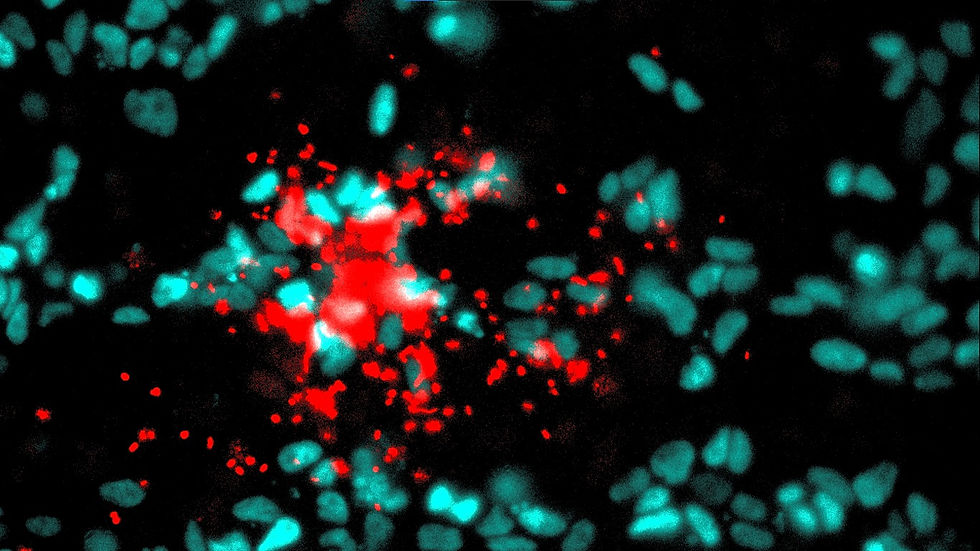
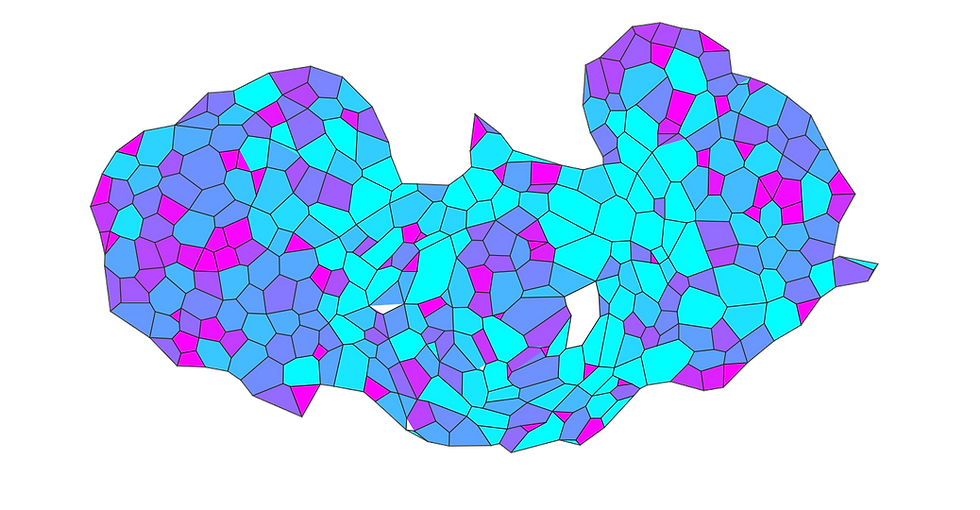
Understanding macrophage (MΦ)-endothelial cell (EC) interactions is essential for comprehending the pathogenesis and systemic dissemination of Listeria monocytogenes (Lm), the causative agent of listeriosis. In recent years, listeriosis cases have risen across Europe, with over 2,900 confirmed infections and a mortality rate exceeding 50 % in 2023, primarily affecting vulnerable populations (EFSA and ECDC, 2024). Lm’s capacity to persist within host cells allows it to subvert the immune system. By hijacking MΦs, Lm leverages these cells as "Trojan horses" to breach endothelial barriers such as the blood-brain barrier, resulting in severe diseases. This study investigates how MΦs modulate EC morphology and alignment and how MΦ-infection impacts this. We observed that ECs polarize and collectively align after exposure to Lm-infected and uninfected MΦs. Using a microfluidic device to expose ECs to flow shear stress (FSS), we observed that flow-primed ECs polarized and collectively aligned in the direction of flow. This alignment was decreased upon exposure to uninfected MΦs, while Lm-infected MΦs had no significant impact. Furthermore, Lm-infected MΦs showed a 1.5-fold increase in adhesion to the EC monolayer. MΦs—infected and uninfected—showed transendothelial migration via both paracelluar and transcellular routes. Taken together, we discovered that infected MΦs adhere more efficiently to ECs and that in static conditions both FSS-priming, and MΦ exposure lead to collective EC alignment, which is decreased only by uninfected MΦ, but not by Lm-infected MΦs. These findings underscore how intracellular pathogens exploit immune cells and endothelial responses for systemic spread. Understanding this process better will be crucial for understanding how (un)infected MΦs interact with and transmigrate through the endothelium. Developing therapeutic strategies to target host cells rather than bacteria might be a promising approach to limit disease progression.
Presentation
This presentaion aimes to give an overview about the project.
More details
If you want to get more in depth details, fell free to have a look into my master thesis.

Kommentare